
|
|||||
|---|---|---|---|---|---|

|
|||||
|
|
|||||
|---|---|---|---|---|---|
|
|
|||||
Popular Articles: |
JUMP TO: Reasons 1-12 - Reasons 13-27
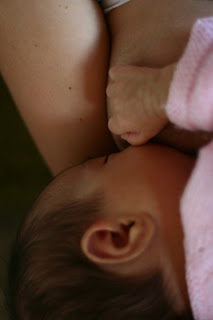 Ce qu'Anne-Laure voit photo by ODHD on Flickr. Some rights reserved. |
Many chemicals, additives, types of sugars, artificial vitamins and minerals must be added to cow's milk to make it tolerable for the human infant . . . but still it is not nutritionally-complete.
The milk of the mother of a premature baby is higher in many of the growth factors and other nutrients her baby will need. In cold climates, there is more fat for energy. In hot, more water to prevent dehydration.
An artificially-fed baby's gut bacteria takes most of the iron in formula, which encourages the growth of more bacteria which can cause gut damage, disease and blood loss. Zinc deficiency can be caused by too much iron.
The Breastfeeding Book |
Proteins in artificial formulas are not as well-utilized, so more protein must be added. To break down this extra protein and excrete the wastes causes an additional stress on your baby's immature liver and kidneys.
Parents can and have made mistakes in preparing artificial formulas. Ranging from over-concentration (leading to hypernatraemia and brain damage) to over-dilution (leading to failure-to-thrive, even starvation) and sickness from poor hygiene and storage.
Most artificial formulas must be mixed with water, yet variations in the mineral and trace elements in water can be considerable. A formula with added fluorine, mixed with fluorinated water, may added up to a toxic level of an element known to interfere with enzyme action. Prolonged boiling concentrates the mineral load. Pollutants are being found even in treated city water.
Lactoferrin, the iron transfer protein, inhibits staphylococci, E. coli and thrush, unless your baby is overloaded with iron. The B12 transfer factor starves harmful bacteria to the nutrients essential for their growth. Yet, cow's milk is designed to encourage this bacterial growth for digestion, making it an ideal culture for the growth of bacteria which is harmful to humans.
The Womanly Art of Breastfeeding |
In the past, there have been problems with the lead solder leaching into the artificial formula. This lead to the destruction of B vitamins in one formula in the 1950's. Lead is a cumulative poison that damages the brain. Tin-alloy cans leach tin, which can cause a zinc deficiency. High quantities of the plasticizers, used to line some formula cans, were found in the artificial milk after a conveyor belt malfunctioned.
Due to the many nutritional differences, the breast-fed baby's endocrine responses differ from those of the artificially-fed baby.
It includes many substances that affect your baby's use of nutrients and also the immune capacity. Even the lack of one specific nutrient can cause immune deficiency.
Since the function of some of these enzymes is still unknown, it is impossible to guess what the absence from artificial formulas might mean.
Researchers say this may be important to the growth and reproduction of infant tissues. Growth factors are especially high in the milk of mothers of premature babies. Insulin, also present in human milk, is considered to act as a growth factor. As well, growth factors protect the gastrointestinal tract and prevent the growth of duodenal ulcers.
JUMP TO: Reasons 1-12 - Reasons 13-27
RESOURCES:
• Breastfeeding Matters: What We Need to Know About Infant Feeding - » Click for more info: US | CA | UKAnother interesting article on breastfeeding:
Breastfeeding: New Discoveries, by Dr. Wootan.
RECOMMENDED READING:
• The Womanly Art of Breastfeeding - » Click for more info: US | CA | UK
This article compliments of Born to Love.
Send questions, comments, and suggestions to: catherine@borntolove.com
Born to Love articles are written by Catherine McDiarmid-Watt
Born to Love is a participant in the Amazon Services LLC Associates Program, an affiliate advertising program designed to provide a means for sites to earn advertising fees.
NOTE: All logos, company names, brands, images, trademarks and other intellectual property are the property of their respective owners.
Born to Love is a participant in the eBay Partner Network, an affiliate advertising program designed to provide a means for sites to earn advertising fees by advertising and linking to eBay.com.
Copyright © 1978 - BorntoLove.com - All Rights Reserved.
Last updated - April 5, 2024


